日本語
日本語

After reviewing thousands of PCB fabrication jobs as a PCB process engineer, one question comes up more than any other: "Which surface finish should I choose?" The answer is not simply about choosing the most popular option; it is a manufacturing process decision that depends on multiple factors. It affects solderability, reliability, shelf life, and long-term field performance. This guide explains every major PCB surface finish, their real-world trade-offs, and how to choose the right one for your next design.
What is PCB surface finish?
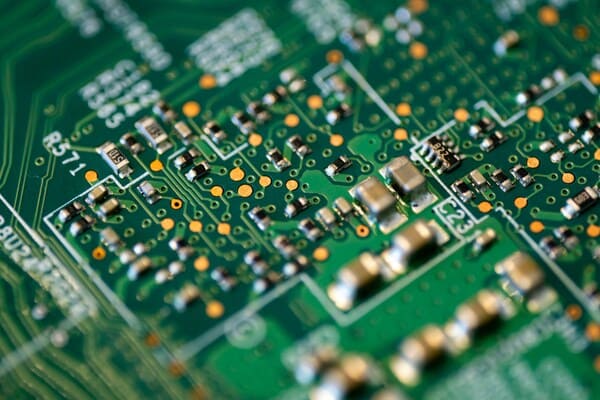
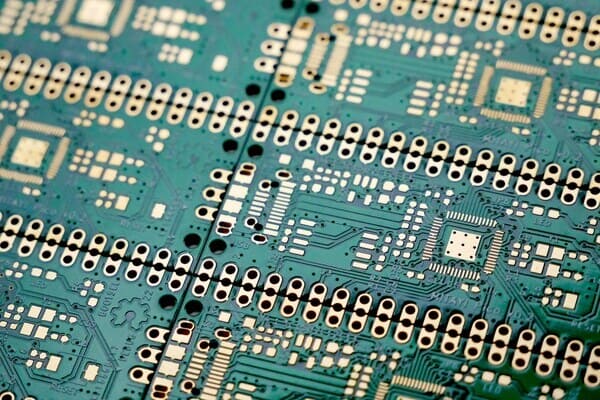
A PCB surface finish is a thin coating applied to exposed copper pads, through-holes, and vias after solder mask application. It serves two essential purposes: protecting bare copper from oxidation before assembly and providing a solderable surface for reliable component attachment. Without a surface finish, exposed copper oxidizes quickly, making it difficult for solder to wet the pads and form reliable joints.
A surface finish also influences electrical and manufacturing performance. Different finishes introduce different contact resistance characteristics, can affect signal integrity in high-frequency applications, and interact differently with lead-free solder during the reflow process. Selecting a finish based solely on cost, without considering the application's electrical, mechanical, and assembly requirements, can increase manufacturing risks and reduce long-term product reliability.
PCB Surface Finish Types Explained
HASL and Lead-Free HASL
HASL dips the bare board in molten tin-lead solder, then flattens the coating with hot air knives. It is the oldest finish still in production and remains the default for cost-sensitive, through-hole-heavy boards.
The uneven surface is the real limitation. Coplanarity across a HASL board can vary by more than 0.001 inch pad to pad, which is why it is unsuitable for fine-pitch components below 0.5mm and for BGA packages that need flat, coplanar pads.
Lead-free HASL swaps the tin-lead alloy for tin-copper-nickel or tin-silver-copper blends to meet RoHS. It processes at a higher temperature, roughly 260°C compared to 235°C for leaded HASL, which increases thermal stress on thin laminates and can cause measurable warpage on boards under 0.8mm thick.
OSP (Organic Solderability Preservative)
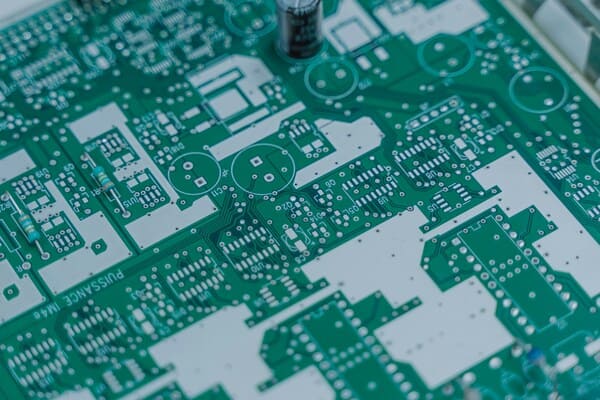
OSP grows a thin organic film, typically benzimidazole-based, directly on the copper surface. It is flat, lead-free by nature, and the cheapest finish to apply because it skips metal plating entirely.
The tradeoff that competitor articles rarely quantify: OSP film thickness is usually 0.2 to 0.5 microns, and it degrades with every thermal cycle. A board that goes through two reflow passes and a wave solder step has already consumed most of its protective margin before it even reaches the field. If your assembly involves more than two reflow cycles or extended dwell time between fabrication and assembly, OSP is a real risk, not a theoretical one.
ENIG (Electroless Nickel Immersion Gold)
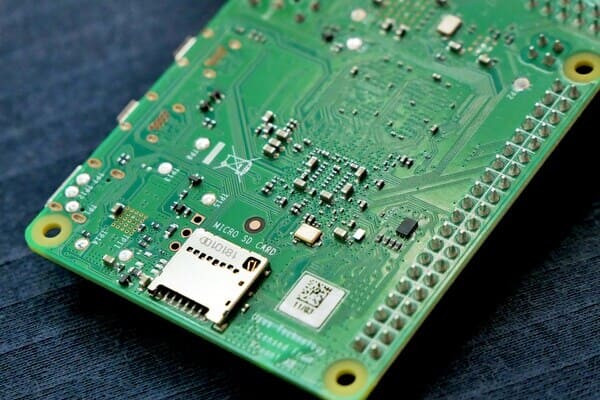
ENIG deposits 3 to 6 microns of electroless nickel followed by 0.05 to 0.1 microns of immersion gold. The nickel layer is the actual protective barrier and solder-joint former; the gold layer exists only to protect the nickel from oxidizing before assembly and to prevent it from being consumed too quickly during soldering.
There is a common misunderstanding about black pad syndrome that is worth clarifying: it is not caused by excessive gold thickness. It occurs when the immersion gold process over-etches the nickel surface through hyper-corrosion, creating a phosphorus-rich, brittle nickel layer that prevents proper bonding with the gold layer. During reflow, the solder joint may appear normal at first but can fail under mechanical stress or thermal cycling, sometimes months later. Controlling bath chemistry, nickel phosphorus content (typically 6 to 9 percent), and immersion time is what prevents this issue, not simply reducing gold thickness.
ENEPIG (Electroless Nickel Electroless Palladium Immersion Gold)
ENEPIG adds a 0.05 to 0.15 micron palladium layer between the nickel and gold. That palladium layer is what eliminates black pad risk almost entirely, because it acts as a diffusion barrier during the gold immersion step instead of letting gold attack the nickel directly. It also gives excellent wire-bond and solder-joint reliability on the same board, which matters if you are combining SMT components with gold wire bonding on a single assembly. Expect ENEPIG to run 15 to 30 percent above ENIG pricing depending on volume.
Immersion Silver
Immersion silver deposits 0.1 to 0.4 microns of nearly pure silver directly on copper through a displacement reaction. It is flat, solders extremely well, and has the best signal integrity of the common finishes because silver has lower resistivity than nickel-gold stacks, which is why it shows up frequently on RF and high-speed digital boards.
Its known weakness is tarnishing under high humidity and sulfur exposure, and galvanic corrosion (often called silver creep) between adjacent traces if the solder mask registration is poor. Boards using immersion silver should be vacuum-sealed with desiccant and used within six to twelve months of fabrication.
Immersion Tin
Immersion tin forms a flat, solderable tin layer directly on copper, typically 0.8 to 1.2 microns thick, with an organic post-dip to slow intermetallic growth. It handles fine-pitch parts well and is fully lead-free, but a copper-tin intermetallic compound forms at the interface over time even in storage, which is why shelf life is limited to about six months under proper conditions. Tin whisker growth, driven by compressive stress in the tin layer, is the other risk that matters for any board destined for a high-reliability or long-storage application.
Hard Gold and Electrolytic Nickel Gold
Hard gold electroplates a thick gold layer, often 20 to 50 microinches, alloyed with cobalt or nickel for wear resistance. It is not meant for solder joints; it is meant for edge connectors, keypads, and contacts that see repeated mechanical insertion cycles. Electrolytic nickel gold uses a thinner gold layer for general-purpose plated areas where solderability and moderate wear resistance both matter, at a lower cost than hard gold.
PCB Surface Finish Comparison Table
| Finish | Flatness | Fine-Pitch/BGA Suitability | Shelf Life | Relative Cost | Best Fit |
|---|---|---|---|---|---|
| HASL (Leaded) | Poor | Not recommended | 12 months | Low | Through-hole, simple SMT |
| HASL Lead-Free | Poor | Not recommended | 12 months | Low | RoHS through-hole boards |
| OSP | Excellent | Good (limited reflow cycles) | 6 months | Lowest | Single-reflow, cost-driven builds |
| ENIG | Excellent | Excellent | 12 months | Medium-high | Fine-pitch, mixed assembly |
| ENEPIG | Excellent | Excellent | 12 months | High | Wire bonding, high-reliability |
| Immersion Silver | Excellent | Excellent | 6-12 months | Medium | RF, high-speed signal boards |
| Immersion Tin | Excellent | Excellent | 6 months | Medium | Fine-pitch, press-fit connectors |
| Hard Gold | Excellent | Not for solder joints | Years | Highest | Edge connectors, keypads |
How to Choose the Right Surface Finish for Your Application
Start from your assembly process and end use, not from price:
1. Fine-pitch BGA or 0201/01005 passives — ENIG or immersion silver. Flatness and shelf life both matter here, and the coplanarity of HASL will cause real yield loss.
2. RF, mmWave, or high-speed digital boards — Immersion silver first, ENIG second. Silver's lower resistivity keeps insertion loss down at high frequencies.
3. Boards combining SMT and gold wire bonding — ENEPIG. It is the only finish on this list built for both processes reliably.
4. Automotive or industrial boards facing thermal cycling and vibration — ENIG, sized with adequate nickel thickness for the expected number of thermal cycles.
5. High-volume, cost-sensitive consumer electronics with single reflow — OSP, provided your assembly line can guarantee a short time-to-solder window.
6. Boards with edge connectors or mechanical contacts — Hard gold on the connector fingers, paired with ENIG or HASL on the rest of the board (a selective, or dual, finish).
7. Boards that will sit in distribution or spares inventory for over a year — ENIG or ENEPIG. Avoid OSP and immersion tin for anything with an uncertain assembly date.
This is also where a manufacturer's finish capabilities actually matter in practice. Boards for a customized product line rarely fit neatly into one finish category, and I have seen more schedule delays caused by a fab house not supporting the requested finish than by any design error. PCBgogo, built around individually customized orders, supports the full range covered above, including leaded and lead-free HASL, OSP, ENIG, ENEPIG, immersion tin, immersion silver, chemical and electrolytic hard gold, so a mixed board (gold fingers plus ENIG body, for example) can be specified in a single fabrication order rather than split across two vendors. If you are unsure which finish best fits your assembly process, reliability requirements, or production timeline, PCBgogo's engineering team can help review your specifications and recommend a suitable option before fabrication begins.
Common Surface Finish Mistakes That Cause Field Failures
Specifying ENIG without a nickel phosphorus spec. Leaving nickel content unconstrained is how black pad slips through incoming inspection undetected.
Storing immersion silver boards without desiccant. Humidity exposure during a normal shipping cycle is often enough to start visible tarnish before assembly even begins.
Assuming OSP survives rework. A board reworked twice has likely burned through its OSP film; if rework is expected, budget for ENIG instead.
Ignoring galvanic effects between dissimilar finishes on the same panel. Mixing gold fingers with an unmasked silver or tin field invites corrosion at the boundary if design rules are not followed precisely.
Choosing HASL for BGA boards to save cost. The coplanarity problem is not marginal. It is one of the most frequent root causes of BGA head-in-pillow defects I see traced back to fabrication.
Frequently Asked Questions
What is the most reliable PCB surface finish?
ENIG is widely considered one of the most reliable PCB surface finishes due to its excellent solderability, flat surface, and strong corrosion resistance. However, the best choice depends on your application, assembly process, and reliability requirements.
Is ENIG better than HASL?
For fine-pitch and BGA assemblies, yes. ENIG gives a flat, uniform surface and longer shelf life. For simple through-hole boards where cost dominates, HASL remains a valid and cheaper option.
How long does a PCB surface finish last in storage?
HASL and ENIG typically hold solderability for around 12 months in proper storage. OSP and immersion tin drop to roughly 6 months, and immersion silver falls in the 6 to 12 month range depending on humidity control.
Can I mix two surface finishes on one board?
Yes. Selective finishing, most commonly hard gold on edge connectors paired with HASL or ENIG elsewhere, is a standard option that most established fabricators can run in a single production pass rather than as two separate jobs.
Does surface finish affect impedance in high-speed designs?
Yes, though the effect is small compared to trace geometry. Immersion silver introduces the least added resistance of the common finishes, which is why it is favored on RF boards where every fraction of a dB matters.
Conclusion
There is no universally best PCB surface finish. There is only the finish that matches your component pitch, your assembly process, your storage timeline, and your end-use environment. Get these four variables right before looking at the price, and you can avoid the surface finish issues that often lead to costly rework or production delays.
At PCBgogo, we support a full range of surface finishes, including HASL, OSP, ENIG, ENEPIG, immersion tin, immersion silver, and hard gold, allowing engineers to match finish selection with specific performance requirements. You can select the surface finish that best fits your project requirements on our quote page and get an instant quote for your PCB order.