日本語
日本語

In the world of electronics design and manufacturing, short circuits are the "silent killers" of hardware reliability. While many assume shorts happen during assembly, the seeds are often sown during the layout phase. This guide explores how these issues originate and how to implement systematic PCB short circuit prevention during the design stage.
I. Root Causes: Hidden Hazards in the Design Phase
Short circuits are rarely random; they are typically the result of specific oversights during the CAD layout. Here are four common scenarios:
Case 1: Overlapping Copper Layers
When a designer uses manual copper pours to connect a power net, they may accidentally overlap an existing ground net.
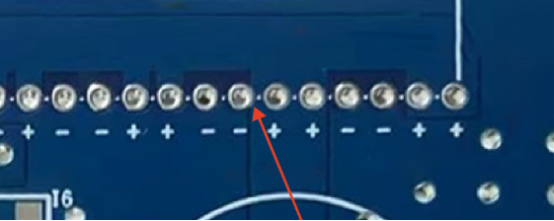
The Root Cause: Failure to set differential clearance rules or human error during manual polygon pouring.
The Risk: While most EDA tools (Altium Designer, Cadence, PADS, KiCad) flag this via DRC, issues arise if a designer uses "Fill" objects instead of "Smart Polygons," as Fills may not carry net attributes and can bypass automated checks.
Case 2: Overlapping Vias from Different Networks
A via on the Bottom layer (GND) and a via on the Top layer (VCC) may be placed so close that their hole walls physically intersect.
The Root Cause: This overlap creates a direct bridge between power and ground through the plated-through hole (PTH) barrel, a critical failure in PCB short circuit prevention.
Case 3: Missing Isolation on Internal Layers
When a via connects layers 1 and 4, it passes through layers 2 and 3. If the internal layers contain copper planes and no "anti-pad" (clearance) is defined, the via will short to the internal plane.
The Root Cause: Improper setup of stack-up layers or lack of internal layer clearance for non-homologous networks.
Case 4: Insufficient Safety Clearance
If the minimum distance between a via and a trace or copper pour is too small, manufacturing tolerances can lead to unintended physical bridges.
The Root Cause: Designing at the absolute limit of fabrication without a safety buffer to account for minor production deviations.
II. Building the Shield: Best Practices for Prevention
To ensure robust PCB short circuit prevention, engineers must shift from "finding errors" to "designing out risks."
1. Pre-Design: Process Alignment
Before placing a single component, sync with your manufacturer. Obtain their technical limits for:
Minimum trace width and spacing.
Minimum annular ring and drill size.
Action: Set your EDA design rules to be slightly above the manufacturer’s limit to provide a safety margin.
2. Layout Phase: Habits and Visual Verification
Avoid Acute Angles: Use 135° or curved traces. Acute angles can trap etching chemicals (creating "acid traps") that result in residual copper slivers, leading to shorts.
Strategic Teardrops: Use teardrops to strengthen connections; however, in high-density areas, confirm they don't violate clearance with neighboring traces.
Net Highlighting: Regularly use the "Highlight Net" feature for $VCC$ and $GND$. This allows you to visually trace the path and ensure no unexpected copper has bridged different networks.
3. Validation: The Power of DRC and DFM
Comprehensive DRC (Design Rule Check): Ensure your DRC covers all combinations: Trace-to-Trace, Pad-to-Pad, Via-to-Copper, and Via-to-Via.
DFM Analysis: Don't rely solely on your EDA software. Use dedicated DFM (Design for Manufacturing) tools to analyze the final Gerber files. These tools simulate the fabrication process to catch slivers or clearance issues that a standard DRC might miss.
Conclusion
Effective PCB short circuit prevention is not a final step—it is a continuous discipline. By integrating strict design rules, disciplined routing habits, and rigorous DFM validation, you can eliminate the majority of short-circuit risks before the board ever hits the production line. To ensure your designs are manufactured with the highest precision and safety standards, consider partnering with an industry leader like PCBGOGO.